
 Menu
Menu
 Close
Close

Sri Vigneshwara Professional
Security Services




.png)
.png)



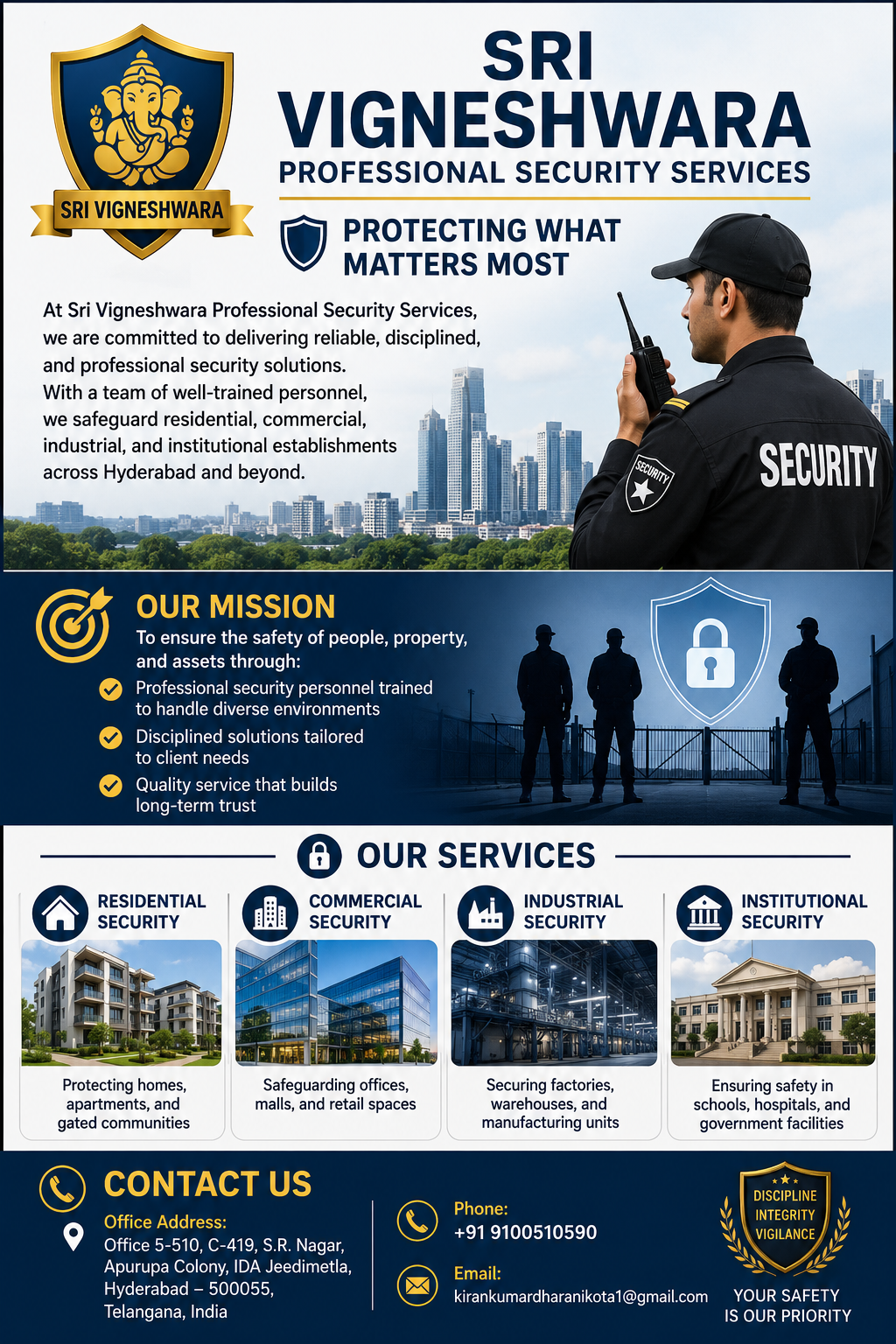


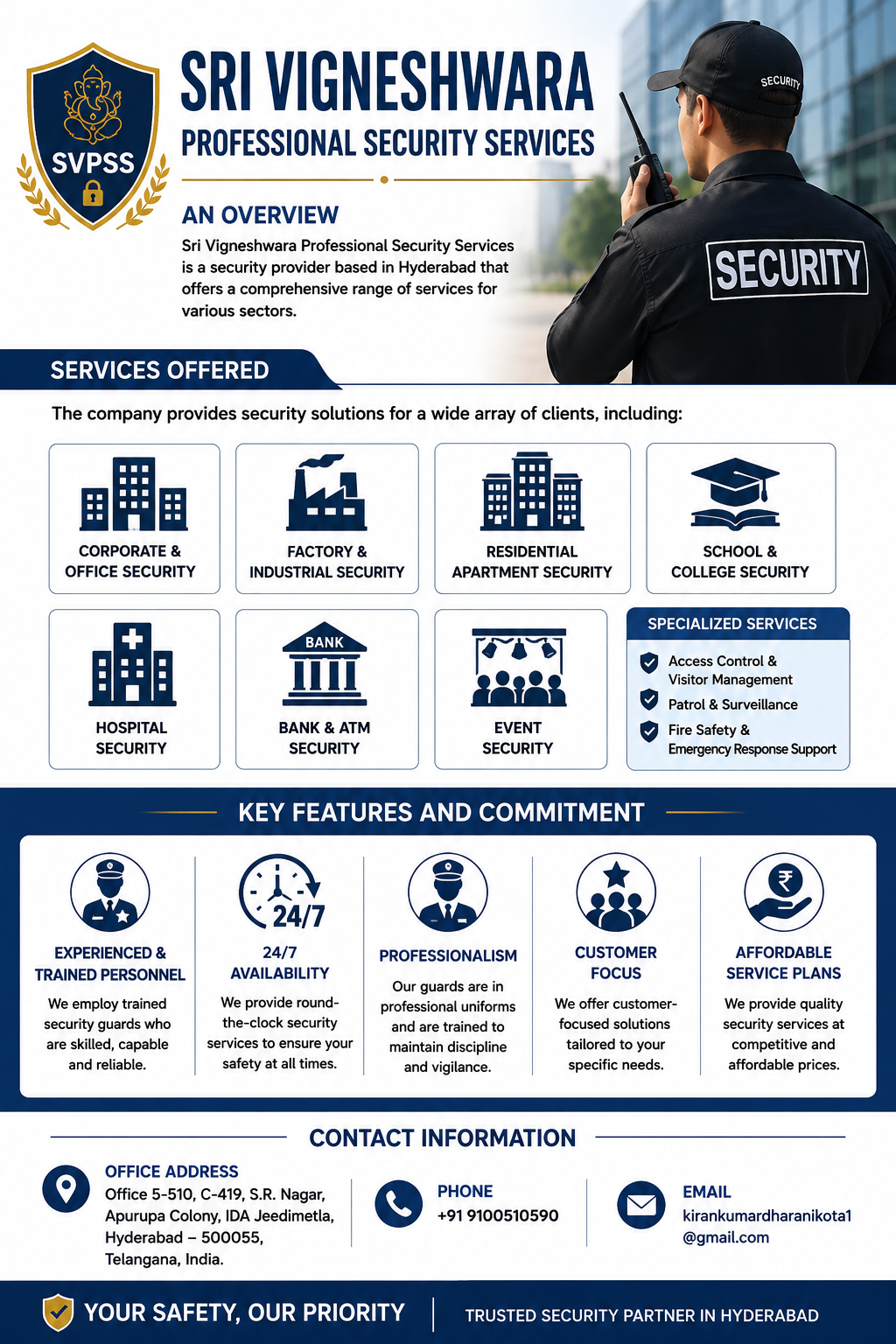
Sri Vigneshwara Professional Security Services Your Trusted Security Partner OUR SERVICES ????️ Security Guards ???? Corporate & Office Security ???? Factory & Industrial Security ????️ Residential Apartment Security ???? School & College Security ???? Hospital Security ???? Bank & ATM Security ???? Event Security ???? Access Control & Visitor Management ???? Patrol & Surveillance Services ???? Fire Safety & Emergency Response Support WHY CHOOSE US Experienced & Trained Security Personnel 24×7 Security Services Professional Uniformed Guards Reliable & Prompt Response Customer-Focused Security Solutions Affordable Service Plans Commitment to Safety & Quality OUR COMMITMENT We provide dependable security solutions that help businesses and families operate with confidence. Every security guard is trained to maintain discipline, professionalism, and vigilance while protecting your premises. CONTACT US Sri Vigneshwara Professional Security Services Office Address: Office 5-510, C-419, S.R. Nagar, Apurupa Colony, IDA Jeedimetla, Hyderabad – 500055 Telangana, India ???? Phone: +91 9100510590 ???? Email: kirankumardharanikota1@gmail.com
Please login to share your review.
Related products
Address
- Office 5-510 C-419 S. R Nagar Apurupa Colony IDA Jeedimetla Hyderabad pin 500055 telangana
- 9100510590
- Fax :
- kirankumardharanikota1@gmail.com

2 Comments
gojobinformation
good services Good Customer Service
gojobinformation
best security services professional in india hyderabad